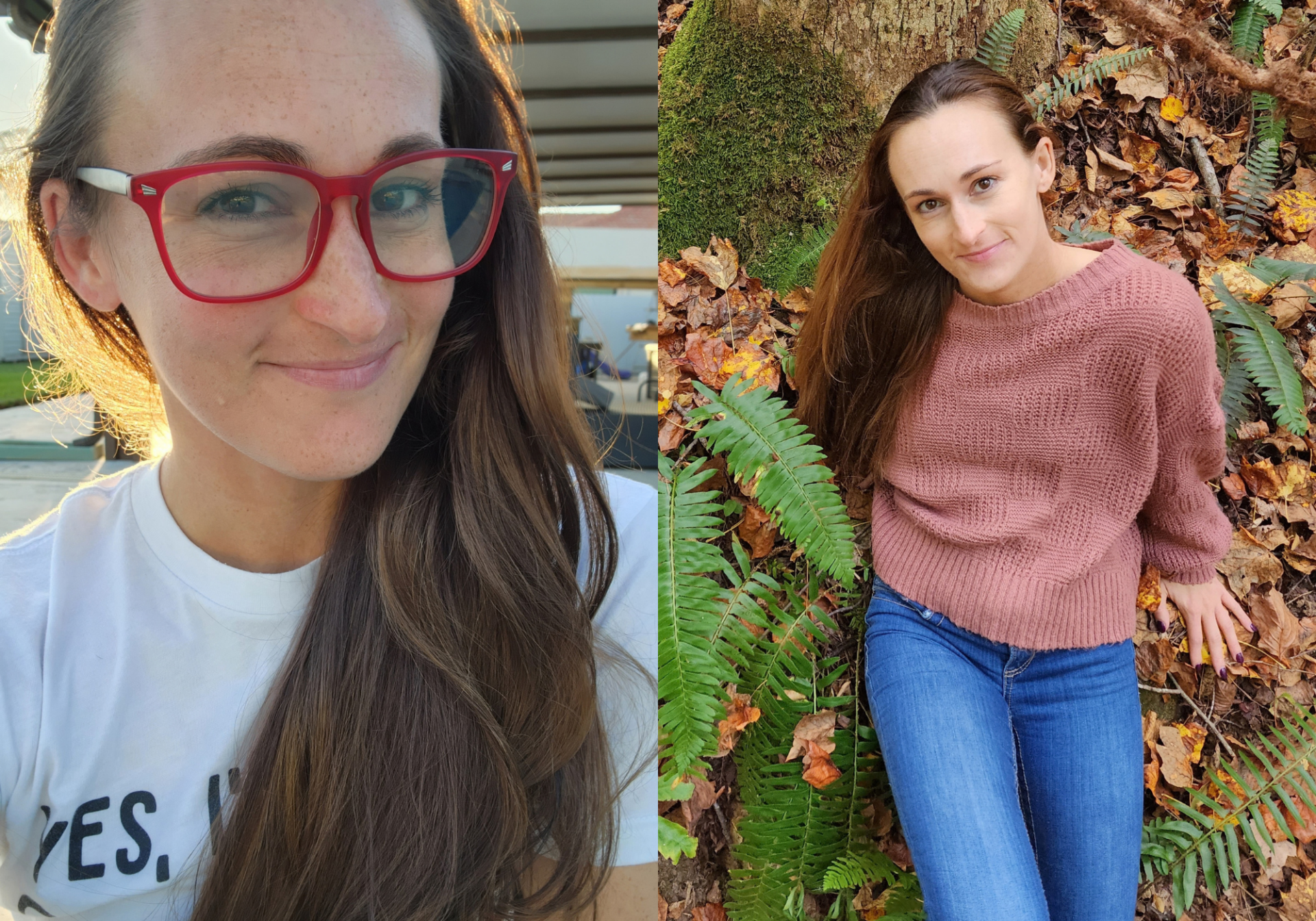
Briana Banos has lived with eczema her whole life, but the rash wasn’t what changed everything. The treatment was. After years of using topical steroids, the award-winning filmmaker and writer went through severe topical steroid withdrawal (TSW).
For almost 12 years now, she’s been part of the TSW community and a vocal patient advocate. She has also made two documentaries, Preventable: Protecting Our Largest Organ and Still Preventable, which give voice to patients going through TSW. The issue reaches a lot of people: Topical corticosteroids are prescribed in 59 percent of atopic dermatitis office visits.
We caught up with Banos at the National Corticosteroid Stewardship Summit in Washington, DC, where she spoke about why steroid use should be treated as a public health concern. We talked about her skin, her self-image, the healing power of art and what’s next.
Can you tell us a bit about your journey with your skin and how it’s shaped the path you’re on today?
“When I was little, I was diagnosed with eczema. It was very mild. But I think at the end of the day, even though it didn’t impede me from doing anything physically, there’s always that social aspect of how my skin looks and how it makes me feel. And so growing up, I was very acutely aware of my appearance and maybe how I was perceived in that way.
I think when it comes to eczema, most of the time we are given topical steroids or things of that nature to help with our skin condition. But what ended up happening to me is I started going through topical steroid withdrawal. So the thing that was actually helping me hide the condition that I didn’t want anybody to know I had made it so much worse. So then I couldn’t hide it.
And at the end of the day, I’m not someone to just sit on my couch and wallow in pity for myself. I used it as fuel to try and educate other people to take a bit more agency in how they deal with their health and talk with health-care providers, and it’s become a career. Now, it’s part of my job to advocate for your best interests and to really think about my health in a new way, because you can have a million problems. But once you have a health problem, that’s the only problem you have.”
What has this chapter of your life taught you about resilience?
“I talked about this a little earlier with someone else, where the term resilience is usually seen as a positive, like a compliment someone gives you. But I think people that are resilient or have had to build that resilience muscle, it’s because they’ve gone through something really difficult that they probably didn’t ask to go through.
So I think going through this alone has made me a resilient person. It’s taught me that whatever challenge comes my way, I can face that and get through it.
How has your relationship with your own skin and self-image changed over the years?
“I’m still very hyperaware of what I look like. I don’t think that will ever change. You know, a skin blemish or things like that still make me feel anxious in ways. It has definitely changed over the years, how I feel in general about my skin health and how it’s portrayed out into the world.
I do think that certain beauty standards almost are a bit of an illness. Having perfect skin, having perfect anything is just not attainable and it’s not real. I remember working with one health care provider when I was on a drug and it was the best I had ever felt. And she was nitpicking this very little thing. And I found that so concerning and dangerous in a way, because I was trying to tell her how good I felt in my body, and she was still trying to tell me that it wasn’t perfect.
And so I think I’ve moved away from what perfect is. You know, I don’t need my skin to look perfect because at the end of the day, I could be hurting myself to try and do that and to just embrace. Sometimes I’m going to have rashes. Sometimes I’m going to have things pop up, and it’s just to see it as a normal thing and nothing to be ashamed of. So I think that’s kind of how things have progressed with my own body image.
For other men and women who are dealing with skin conditions, it is very easy for people to comment on them. Try not to take it too personally. I think people just at the end of the day, either they mean well, or they just get nervous and don’t know what to say to you. And they think, let me just point something out. Just, you know, let it wash off you. It’s not who you are, it’s a part of you, but it is not your identity.”
What role has creativity—dance, filmmaking and storytelling—played in how you’ve coped?
“I mean, I think the arts in general are so helpful for your mind. I stepped slightly away from dance. I don’t dance as much anymore, but I do use the arts in general, especially documentary work with advocacy and things that one side makes it feel very purposeful. So it helps me feel like I’m creating something of meaning in general.
When it comes to art, I actually like to paint and do those types of things. I’ve gotten into pottery lately. I’m doing a workshop. I just think mentally it takes me out of thinking and ruminating and helps me be present.
Especially when I was dancing, just being able to share and move the emotions that I’m feeling without having to say anything, I find it very cathartic. So I think the arts in general are a super helpful way to decompress when you’re thinking about your skin or anything that you’re ruminating over.”
What’s next for you, creatively or in your advocacy work?
“I’m very, very excited. I went from having a YouTube channel, this little YouTube channel, to creating two different documentaries to now working with skin-care brands to do other documentary work. And now coming up in 2027, I will be doing a PhD using observational documentary to look at the psychosocial burden of topical steroid withdrawal.
And I’m hoping to create resources for both patients and health-care providers, medical students, things like that. So, it’s like the next bigger step.
I always feel like an imposter any time I’m stepping out of my comfort zone. But that’s how you learn. That’s how you grow. The only way you keep going forward is to jump in, you know, do it scared, do it scared. I really, really hope that whatever happens with this PhD, that it can make a difference.”