
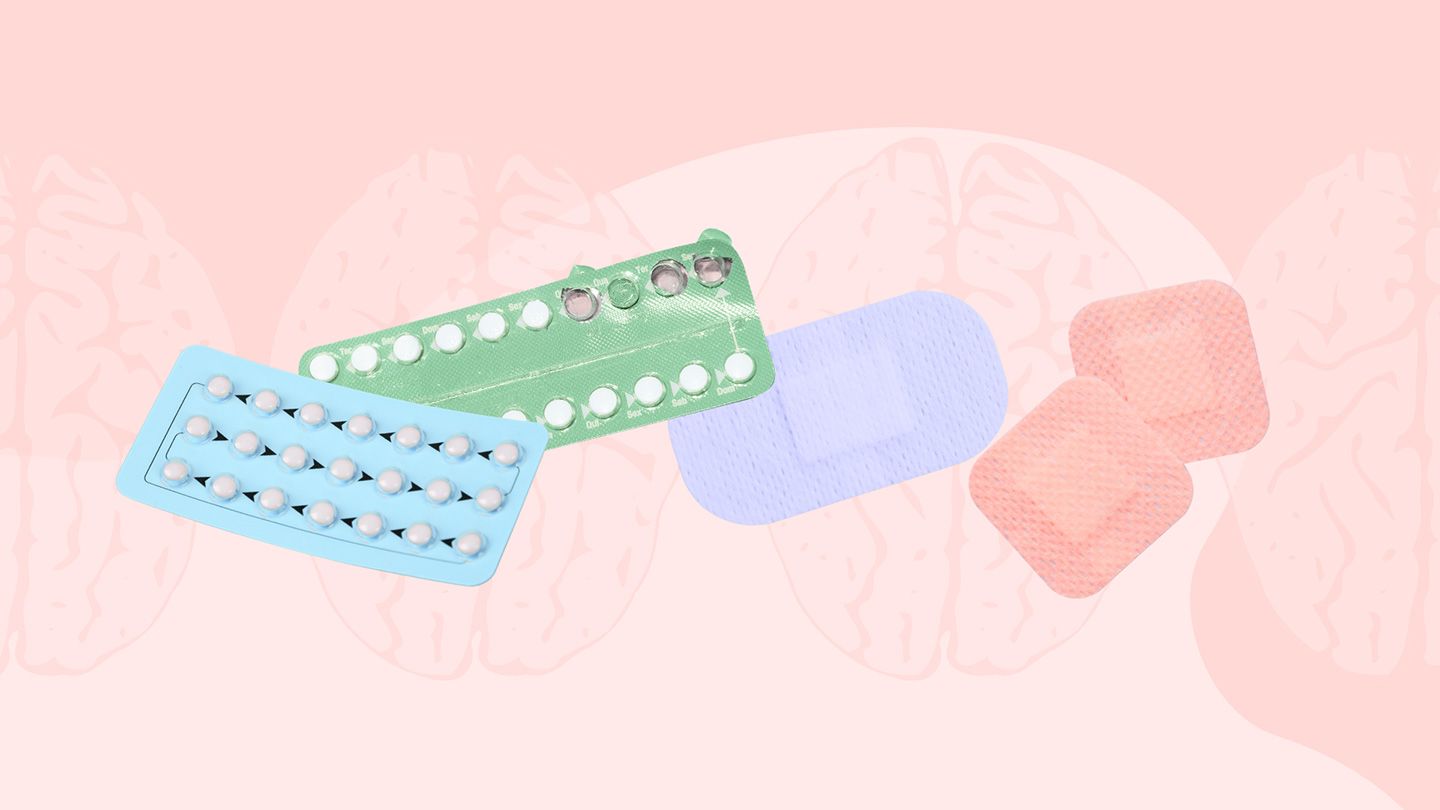
Getting more estrogen over one’s lifetime may be linked to healthier blood vessels in women’s brains later in life, a new study suggests.
[1]
The findings add more evidence that women’s hormonal history, from the first menstrual period through menopause, is tied to brain health decades later, says lead author Giulia Lorenzon, PhD, a researcher at Yale University in New Haven, Connecticut, and former postdoctoral researcher at the Karolinska Institutet in Stockholm.
“I think it is important to recognize that reproductive history is an important part of women’s overall health history, including brain health,” she says.
Women Who Used Hormone Therapy Had Fewer Signs of Blood Vessel Damage
To find out whether a woman’s lifetime exposure to estrogen may be linked with brain health later in life, researchers studied about 350 women in Gothenburg, Sweden, who were all 70 and had no memory or thinking problems. Each woman underwent a brain MRI, and 205 had a second scan five years later.
The women also reported when they had their first period and went through menopause, and whether they had ever used birth control pills or hormone therapy. Nearly three-quarters had taken the pill, and about 6 in 10 had used hormone therapy.
On the scans, researchers looked for four signs of damage to the brain’s tiniest blood vessels:
- Bright spots in the white matter
- Tiny areas of old stroke damage
- Small bleeds
- Enlarged fluid-filled spaces around blood vessels
These injuries are all signs of cerebral small vessel disease, which is increasingly linked to memory and thinking problems and dementia. About 4 in 10 women in the study had at least one sign.
After accounting for education and conditions such as high blood pressure and diabetes, the researchers found that women who’d used hormone therapy had about 59 percent lower odds of having two or more of these signs compared with women who’d never used hormones.
“We also found that use of hormonal birth control and menopausal hormone therapy was associated with better-preserved white matter, the tissue connecting different brain regions. Women who had used both had the highest white matter integrity,” says Dr. Lorenzon.
[1]
[2]
Later Menopause Was Also Tied to Healthier Brain Blood Vessels
“We found that women with a longer reproductive lifespan, [meaning] more years between their first period and menopause, had a lower burden of cerebral small-vessel disease at age 70,” says Lorenzon.
When the researchers looked at the two ends of that span separately, the timing of menopause made the difference: Women who went through menopause later had less blood vessel damage, while age at first period didn’t matter.
That link, and the link between birth control pills and healthier white matter, were both weaker than the ones for hormone therapy.
The researchers didn’t find a link between estrogen exposure and thinning in brain areas that are affected by Alzheimer’s disease, except possibly in women who carry APOE-e4, a gene variant that raises Alzheimer’s risk. In that group, hormone therapy users had thicker tissue in those areas.
How Estrogen Might Help Protect the Brain’s Blood Vessels
“Estrogen plays a central role in the female reproductive system, including the menstrual cycle. But its effects extend well beyond reproduction: It acts in the brain, blood vessels, bones, and other organs, regulating processes that are important for health throughout life,” says Lorenzon. Estrogen levels rise and fall during a woman’s reproductive years and drop sharply at menopause, she says.
The hormone may help the brain’s blood vessels partly by protecting heart health, says Riley Bove, MD, a professor of neurology and neuroimmunology at the UCSF Weill Institute for Neurosciences in San Francisco, who wasn’t involved in the study. High blood pressure, diabetes risk, and high cholesterol, which can all damage blood vessels, tend to worsen after menopause, she says.
Estrogen may also directly protect the brain’s small blood vessels, says Lorenzon. “First, estrogen may help maintain blood vessel health by supporting the cells lining blood vessels and regulating blood flow, potentially reducing damage to the small vessels supplying the brain,” she says.
The hormone also fights inflammation and acts as an antioxidant, says Lorenzon. “This may be particularly relevant around menopause, when estrogen levels decline, or after surgical menopause, when the decline can be more abrupt,” she says.
“Another possibility involves the glymphatic system, the brain’s waste-clearance pathway. Enlarged perivascular spaces, one of the markers we examined, may reflect alterations in this system,” says Lorenzon.
“In animal models, estrogen has many different protective effects. It has protective effects on general health and circulation, and it also has specific effects on neurons and other cell types in the brain,” says Dr. Bove.
These processes still need to be studied in people, and this study didn’t measure them directly, says Lorenzon.
The Study Points to Blood Vessels as a Link Between Estrogen and Brain Aging
Research on estrogen and menopause has focused mostly on memory, thinking, and Alzheimer’s disease, with less attention to changes in the brain’s blood vessels and white matter, says Lorenzon.
“By taking this broader, lifespan perspective, our findings help us better understand how women’s reproductive history may relate to the biological and neurovascular changes underlying their vulnerability to cognitive decline and dementia, potentially even before cognitive symptoms become apparent,” she says.
The specific imaging findings are a strength of the study, says Bove. “It’s looking at specific mechanisms and not just brain volume loss,” she adds.
[3]
Strengths and Limitations of the Study
The study’s strengths include two rounds of brain scans for the same women and taking into account both their natural estrogen exposure and the hormones they took, says Bove. But it was a relatively small number of participants, she says.
“These are women who already made it to age 70 being cognitively normal, so maybe you’re filtering out women who had cognitive changes earlier on,” says Bove.
Women also reported their own hormone use, and the researchers didn’t know the type, dose, or timing of treatment. The women were healthy, well educated, and Swedish, so the results may not apply to everyone. And the second scans showed no differences in how fast brain changes progressed, possibly because five years was too short, the authors wrote.
Findings like these make it tempting to say that menopause hormone therapy is better for brain health, but this is an observational study, and so it doesn’t prove that, says Bove.
“Observational studies often show that menopausal hormone therapy is associated with better brain health, but when you look at randomized controlled trials, you don’t see that effect,” she says. Such clinical trials have looked at only about 7 to 10 years of results; perhaps a longer trial would help further clarify the link between estrogen and brain health, Bove adds.
One possible reason that observational studies find a link between hormone therapy and brain health is that women who use hormone therapy may be healthier to begin with, even before they start treatment, says Bove.
Should You Ask Your Doctor About Estrogen to Protect Your Brain?
If you’re interested in hormone therapy, it’s always worth a conversation with your doctor, says Bove. But both experts agree that while hormone therapy has been shown to help manage menopausal symptoms such as hot flashes and night sweats, there’s not enough evidence to take it specifically to protect brain health.
“Menopause hormone therapy should not be taken to prevent dementia or for cognitive benefits if it’s otherwise not indicated,” says Bove.
Hormone therapy isn’t right for everyone, and women with estrogen-sensitive cancers, a high risk of blood clots, or severe heart disease generally shouldn’t take it, she adds.
The benefits and risks also depend on your age, how long it’s been since menopause, your medical history, and the type and length of treatment, says Lorenzon.